


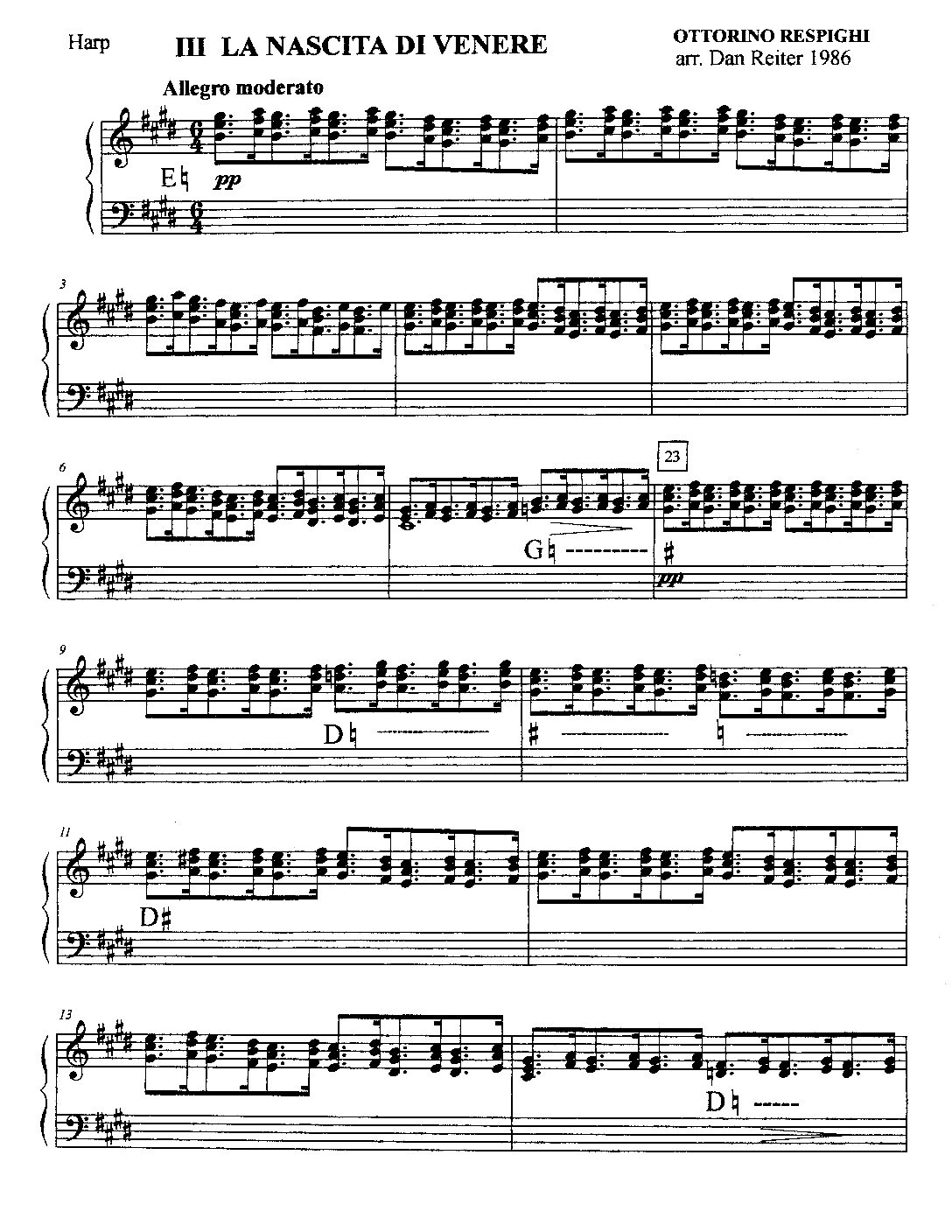
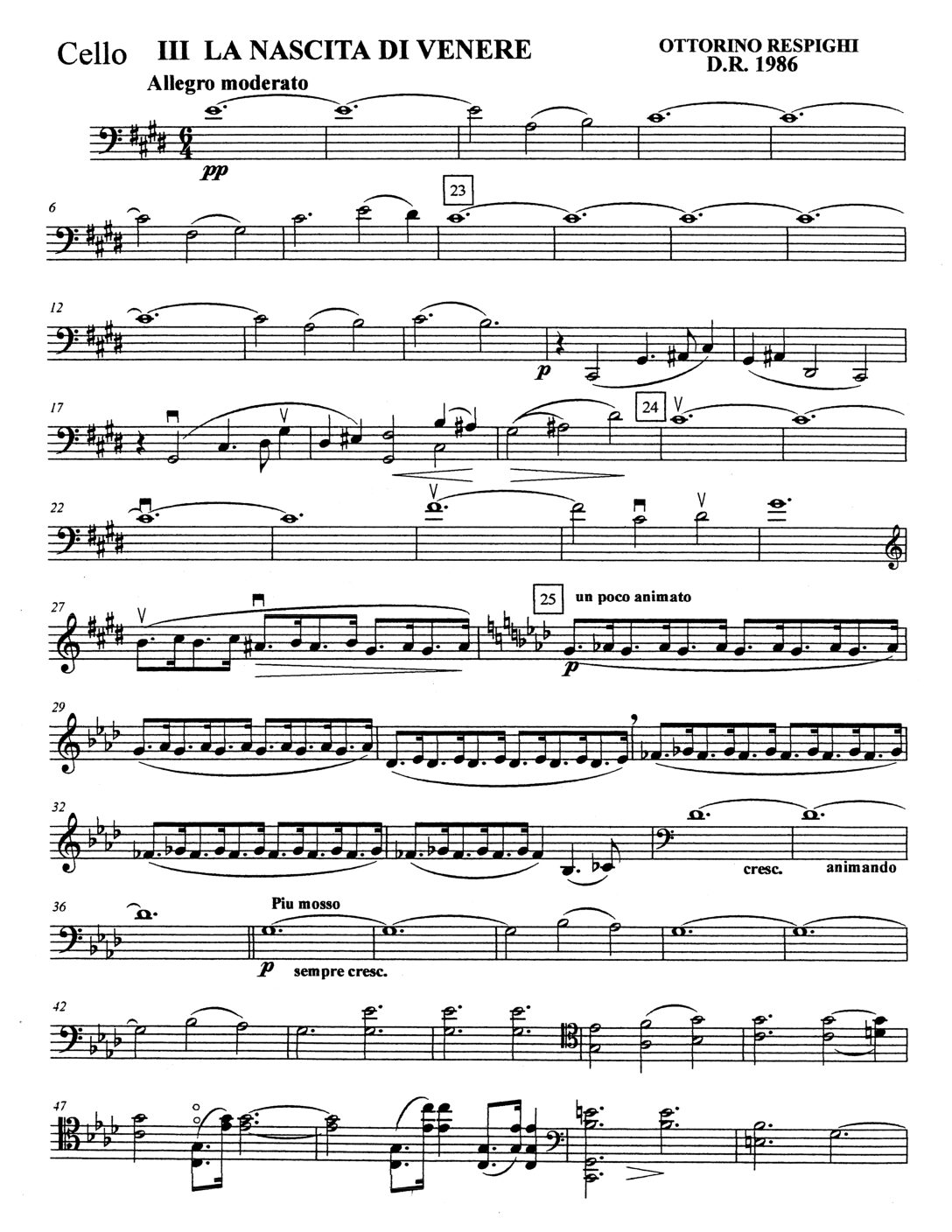
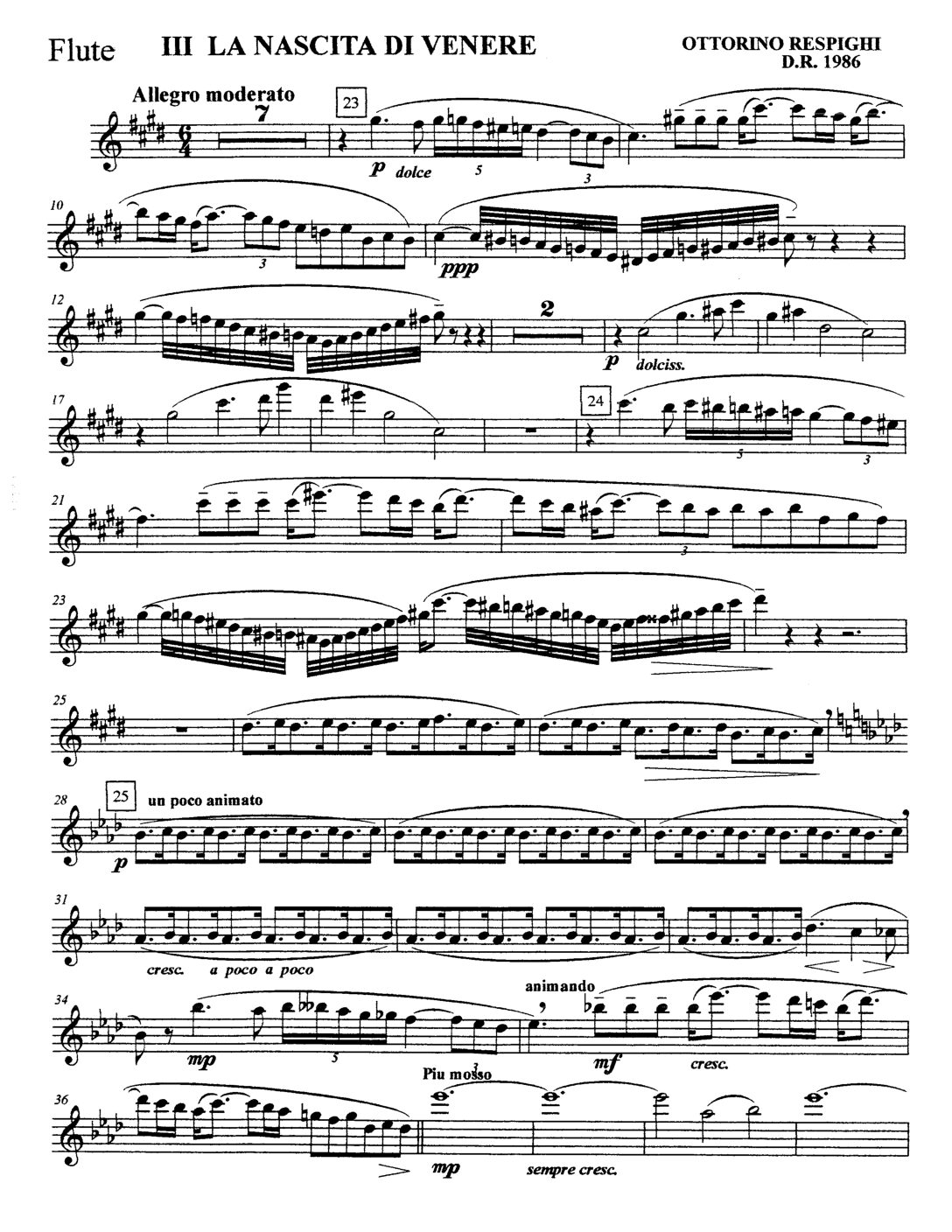
Ottorino Respighi: The Birth (or Rise) of Venus from Three Botticelli Pictures (1927)
Arranged for Flute, Cello, and Harp by Dan Reiter (1985)
This performance features The Birth of Venus from Ottorino Respighi’s Three Botticelli Pictures (often called the Botticelli Triptych), beautifully arranged for flute, cello, and harp by Dan Reiter of the Pacific Arts Ensemble.
Respighi composed this work in 1927, inspired by the famous paintings of Sandro Botticelli. Known as one of Italy’s great Impressionist composers and master orchestrators, Respighi combined vivid musical colors with a remarkable gift for storytelling. Influenced by the sounds and imagination of composers such as Debussy and Ravel, he created music that paints scenes as vividly as any artist’s brush.
Dan Reiter’s arrangement skillfully preserves the spirit and color of Respighi’s original orchestral score while reimagining it for just three instruments. The result is both intimate and expressive, requiring accomplished performers to bring the music’s many colors and textures to life. It is a rewarding work to perform and a delight to hear.
The piece opens with the gentle motion of the sea. The harp creates the steady rise and fall of the waves with small, flowing intervals, while the cello introduces the main melody. Set in a warm major key, the music conveys a sense of peace and tranquility—the Mediterranean Sea calm and undisturbed.
Gradually the intervals widen and the waves grow larger. The harmony shifts into a minor key as Venus begins to emerge from the sea. Throughout this section, the harp maintains its flowing left-hand right-hand pattern, suggesting the endless motion of the water.
As the sea becomes more turbulent, the harmonies grow richer and more complex. The music swells with anticipation as Venus rises from the waves.
The harp’s chords expand across a wider range, and the music returns to a radiant major key. A dramatic grand pause marks the moment of Venus’s full appearance.
Following this moment of suspension, the harp resumes with calm, resonant chords while the flute and cello continue the drama above. Eventually, the harp plays descending chords, suggesting a gentle settling of the scene. The flute re-enters, and the music gradually returns to a state of serenity and beauty.
Reiter’s arrangement allows listeners to hear Respighi’s masterful writing from a fresh perspective. Though performed by only three musicians, the music retains the color, atmosphere, and imagination that make Respighi’s work so memorable.
Visit their website to read more about Dan Reiter, Natalie Cox, and the Pacific Arts Trio here.


